

The Tarax Show's Uncle Norman



His Wunderkammer


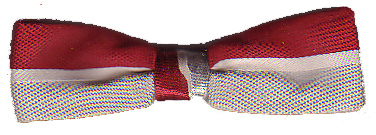
While architect Harry Seidler’s impressive body of work cannot be denied, I must confess to having been more interested in his trademark bow ties than his buildings. I own about 250 vintage clip-on bow ties, and in 1999 I wrote him a letter asking if he would donate one of his to my collection. ‘Sorry to disappoint you,’ he indignantly replied. ‘I have never worn, nor will I ever wear, a “clip-on” bow tie! I only ever use “tie yourself” ties exclusively.’
 There are lots of great Karal Ann Marling stories. All of them true. One of my favourites happened when Karal Ann was Chairman of the Art History Department, which at the time was housed in an old science building, so nearly every room had a sink. Mary, the department’s beloved slide librarian, had complained about a foul smell in one of the rooms. Karal Ann suspected it was due to a certain male member of staff urinating in that room’s sink after a late-night class. At a staff meeting she confronted the poor chap and threatened to ‘cut off his pecker’. Miraculously the offending smell vanished soon afterwards. [Photograph: Robert Tinytwig.]


 After leaving University in the early 1980s, I worked for a short time as a storeman and packer at David Wang’s warehouse in Melbourne. David Wang imported cane ware from China. The warehouse had an international workforce. Roger Yap, a Filipino in his early 30s, was the foreman. Nevertheless, he loved toilet humour (as many of us who worked there also did) and playing practical jokes. For example, out of the blue, he would rush up to Tony Amhad, a Lebanese worker, and fart on him. Then, in a fit of laughter, he would loudly declare that Tony had ‘felt the pressure’. Despite how this may sound, Roger wasn’t putting Tony down (in fact, they were the best of mates). His antics simply helped to ease the boredom of filling countless orders for, say, kitsch cane chickens. Bizarre! Con Berkan, a wiry little Dutchman in his 60s, would single-handedly drag big heavy boxes across the warehouse floor. Because of this, we used to call him ‘the human ant’. However, Con didn’t have Roger’s sense of humour – in fact, quite the opposite. One day Roger was searching for something (probably a cane chicken) in the bottom of a box, and making a terrible mess. Straw was flying everywhere. This greatly amused him, and he began saying in his heavy Filipino accent, ‘I’m a messy cunt, I’m a messy cunt,’ over and over. Con and I were watching this from the sidelines. But Con wasn’t amused by Roger’s antics. He turned to me and said in his heavy Dutch accent in a disgusted tone, ‘If he’s a Mexican, then I’m a Turk.’
by Garry Scale (Derham’s best mate at school) As kids growing up in Geelong we were aware that Happy Hammond (compere of The Happy Show) was Geelong born and bred. His tartan hat and coat and the click of the fingers followed by the catch phrase, “Is everybody happy?” set up Happy as everybody’s friend – a happy affable chappie. My grandfather’s best friend, business partner and nextdoor neighbour was a boyhood friend of Happy’s and if Hap was down for the day he would often pop in for a cup of tea. One afternoon whilst staying with my grandparents I was sent next door on an errand. There, sitting in the breakfast nook sans tartan hat and coat, but clearly recognizable, was Happy Hammond himself. This just didn’t happen to young children in Geelong: Happy Hammond in Uncle Frankie’s kitchen. I stood gob-smacked as Hap turned to Uncle Frankie saying “Bloody hell Frankie! Everywhere I go there are bloody kids, even on my day off, bloody kids.” Not being mean spirited I choose to believe that Happy was having a non-too happy day. And I did continue to tune in.
ADDENDUM

Happy Hammond was an Australian comedian. He was famous for clicking his fingers musically and wearing a ’test pattern’ suit and tartan hat that clashed awfully in real life but worked well in black and white TV (which was then being broadcast in Australia). He started in radio in Melbourne and hosted the Tarax Happy Show on GTV 9, Melbourne, which was then relayed to ATN 7, Sydney. It won a Logie in 1959 for Most Popular Children’s Show. He performed a famous routine which had him singing a silly song while throwing cream pies in his own face. He moved to HSV 7 in 1960 and won a Logie in 1963 for Outstanding Contributions to Children’s Entertainment. (Wikipedia, plus my own corrections)

 Dr Derham Groves joined the Faculty of Architecture, Building and Planning at the University of Melbourne in 1999. After completing his Bachelor degree at Deakin University in 1981, Derham worked in several Melbourne architectural practices, including Denton Corker Marshall and the Public Works Department. In 1983 Derham enrolled in a Masters program at RMIT, researching builders’ rites and ceremonies. He spent 1984 at the University of Minnesota studying with the geographer Yi-Fu Tuan, and completed his Masters degree in 1989. Between 1988 and 1997, Derham taught in the Department of Architecture and Design at RMIT, specializing in design, non-Western architecture and architectural technology. In 1991 he enrolled in a PhD in Art History at the University of Minnesota, researching the post-war do-it-yourself movement. Derham spent 1992 at the University of Minnesota studying with pop culture historian Karal Ann Marling, and completed his PhD in 1996. Derham was an Honorary Research Associate in the school of Political and Social Inquiry at Monash University. He was also the Clay Brick and Paver Association of Victoria Scholar. Derham is currently the co-chair of the popular art, architecture and design area of the Popular Culture Association and the vice-president of the Popular Culture Association of Australia and New Zealand. Derham’s publications include the books Feng-shui and Western building ceremonies (Graham Brash 1991), Mail art: the do-it-yourself letterbox from workshop to gatepost (Hale & Iremonger 1998), TV houses: the influence of television on the Australian home (Black Jack Press 2004), There’s no place like Holmes: exploring sense of place in crime fiction (Black Jack Press 2008), and Victims and villains: Sherlock Holmes meets Barbie and Ken (Ramble House 2009), chapters in the books The Venice Charter Revisited: Modernism, Conservation and Tradition in the 21st Century (Cambridge Scholars Publishing, 2008), Murder 101: Essays on the Teaching of Detective Fiction (McFarland 2009) and Disneyland and culture: essays on the parks and their influence (McFarland 2010) and articles in the journals The journal of popular culture (2004), Dialogue +Design + Culture (2006), Architect Victoria (2008), The La Trobe journal (2009), and Collections (2009). Derham is also the creator of numerous Surrealist artist’s books including Too Many Sherlockian Visiting Cards (1997), Parallel Worlds: Sherlock Holmes & Tintin (2004) and Villains’ Tyre Tracks (2005). His research interests include the architect Arthur Purnell, the actress Anna May Wong, brickwork design, Chinese temples in Australia, the influence of popular culture on architecture and vice versa, and everyday architecture.